Arabs & Arabian Records Aggregator. Chronicler. Milestones of the 25 Countries of the Arabic Speaking World (official / co-official). AGCC. MENA. Global. Ist's to Top 10's. Records. Read & Enjoy./ www.arabianrecords.org
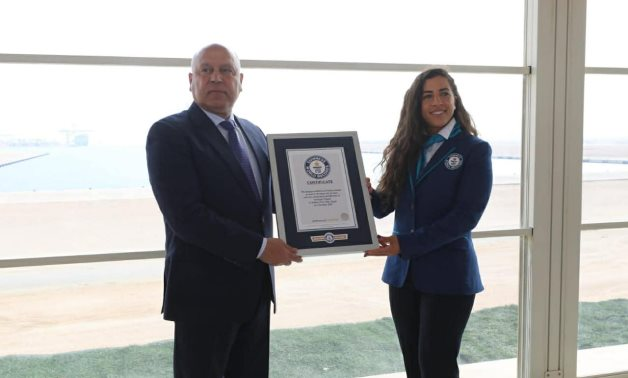
Ain Sokhna Port has been officially certified by Guinness World Records for having the deepest man-made harbor basin on land, plunging to 19 meters.
Kamel El-Wazir, Deputy Prime Minister and Minister of Industry and Transport, received the certificate from accredited adjudicator El-Dafrawi during his visit to the Red Sea port Monday.
Such depth allows the port to accommodate the world’s largest ships, solidifying Egypt’s role as a major global trade and logistics hub.
The Minister expressed great pleasure, emphasizing that the international accomplishment reflects the significant developmental progress across Egypt, particularly in maritime transport.
Wazir also oversaw the trial operations of the Hutchison Container Terminal Ain Sokhna Port as part of a major Red Sea-Mediterranean corridor.
The terminal is the first to be completed under a major development project at Ain Sokhna Port, following the finalization of its infrastructure. The project is part of a plan to turn Egypt into a regional hub for transport, logistics, and transit trade.
Ain Sokhna Port is a critical link in the integrated Sokhna–Dekheila Logistics Corridor, connecting the Red Sea and the Mediterranean, respectively.
source/content: egypttoday.com (headline edited)
_______________
Kamel El-Wazir, Minister of Transport, receives Guinness certificate
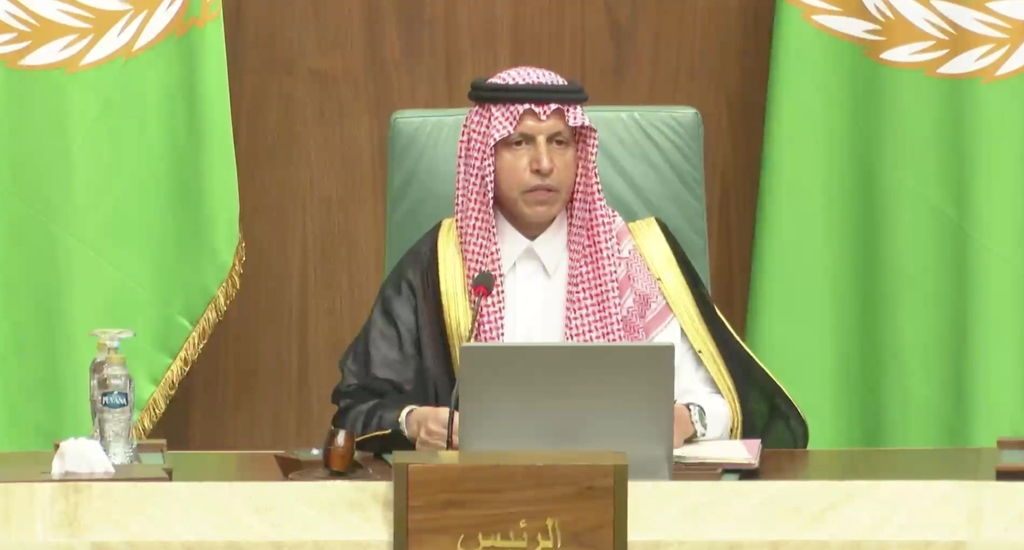
Saudi Shoura Council member Saad Al-Otaibi was elected unopposed as president of the Arab Parliament on Saturday during a procedural session held at the Arab League headquarters in Cairo.
The session was convened to elect the president and bureau of the Arab Parliament, with Al-Otaibi securing the presidency by acclamation.
In his inaugural address, Al-Otaibi expressed his gratitude to Custodian of the Two Holy Mosques King Salman and Crown Prince and Prime Minister Mohammed bin Salman for their continued support and empowerment of Saudi national talent.
He said his election reflected Saudi Arabia’s prominent regional standing, influential role and longstanding commitment to strengthening joint Arab action, cooperation and solidarity.
Al-Otaibi also thanked Shoura Council Speaker Sheikh Dr. Abdullah Al Al-Sheikh for his guidance, support and confidence, describing his election as the result of coordinated institutional efforts.
He expressed appreciation to the heads of Arab legislative councils and parliaments for supporting the Arab Parliament, as well as its members for their contributions.
Outlining his priorities, Al-Otaibi said the next phase would require a renewed vision and more effective institutional performance, with a greater emphasis on translating parliamentary ambitions into concrete achievements.
He called for clear programs and initiatives capable of delivering measurable results, alongside improved efficiency, stronger partnerships and performance indicators to assess progress and impact.
Such measures, he said, would strengthen the Arab Parliament’s presence in regional and international forums and enhance its contribution to addressing issues of common Arab concern.
Al-Otaibi stressed that joint Arab action was no longer an option pursued only when necessary but an established approach to safeguarding Arab countries’ security, protecting their interests and unifying their positions.
He said solidarity, cooperation and coordinated efforts were essential to confronting the challenges facing the Arab world and enabling Arab institutions to respond more effectively.
Turning to the Palestinian issue, Al-Otaibi affirmed that it would remain at the forefront of the Arab Parliament’s priorities.
He pledged to continue defending the Palestinian people’s legitimate right to establish an independent state with East Jerusalem as its capital, in accordance with international resolutions and the Arab Peace Initiative.
He also emphasized the importance of strengthening parliamentary advocacy for the Palestinian cause across regional and international platforms.
Concluding his address, Al-Otaibi called on Arab Parliament members to work collectively to ensure the coming period delivers tangible achievements.
He said the parliament must continue serving as a unified voice for Arab positions, defending the region’s causes and interests while strengthening its influence in meeting the aspirations of Arab nations.
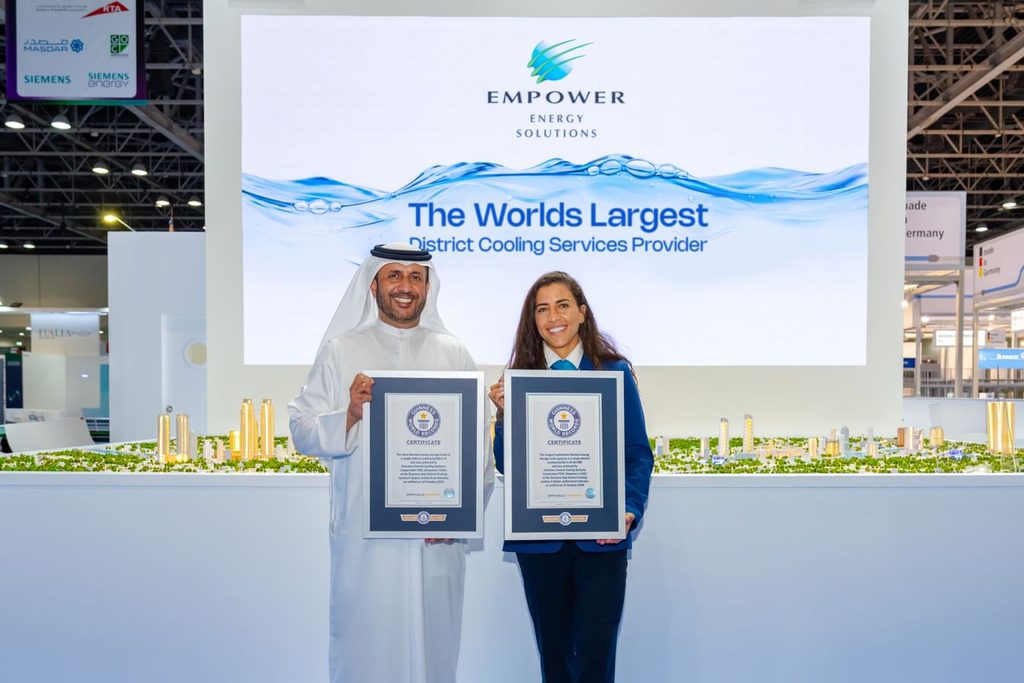
Emirates Central Cooling Systems Corporation (Empower), the world’s largest district cooling services provider, has broken two new Guinness World Records for its Business Bay district cooling project in the field of thermal energy storage. The company received the certificates on the sidelines of its participation in the 28th Water, Energy, Technology and Environment Exhibition (WETEX 2026), organised by Dubai Electricity and Water Authority (DEWA) at the Dubai World Trade Centre.
Empower achieved the records of ‘The largest cumulative thermal energy storage tank capacity at a single district cooling facility’ with a capacity of 94.65 MW (154,000 RTh) and ‘The most thermal energy storage tanks in a single district cooling facility’, with six tanks for its Business Bay District Cooling system in Dubai. These two achievements reflect the exceptional scale of the thermal energy storage capabilities Empower has developed within the project, bringing the total number of Guinness World Records held by the Business Bay project to four.
The certificates reflect the advanced engineering and technical capabilities Empower has developed in large-scale district cooling projects, particularly in deploying thermal energy storage (TES) technology, which allows chilled water to be stored during the most efficient periods and used to meet demand at peak times. This contributes to reducing electrical loads during peak hours, raising the operational efficiency of cooling plants, and enhancing the optimal use of energy and infrastructure, in support of resource sustainability and greater resilience in cooling operations.
The Business Bay project had previously set two world records in Guinness World Records: the ‘Highest Capacity District Cooling Plant’, with a current total connected capacity of 293,862 refrigeration tons (RT), and the ‘Largest Cooling Plant Coverage (Number of buildings)’, currently serving 211 mixed-use buildings, including residential, commercial, hospitality and service buildings, among others.
The Business Bay district cooling project is one of the largest district cooling projects in the world, with an ultimate capacity of 451,540 RT. The project comprises nine district cooling plants, including four currently in operation and two under development, supported by a pipeline network exceeding 53 kilometres in length, with a total of 325 buildings.
These achievements come as Empower continues to expand the Business Bay project. In 2026, the company signed a contract for the design of the fifth plant in the area, with a production capacity of up to 44,000 RT, with construction works set to begin in the fourth quarter of the year, as part of its plans to keep pace with the growing demand for high-efficiency district cooling services in Dubai.
Ahmad Bin Shafar, CEO of Empower, said, “The achievement of two new Guinness World Records for the Business Bay project is a significant milestone, further strengthening the track record of both Empower and Dubai in the district cooling sector. It demonstrates that leadership is defined not only by the scale of projects, but also by the ability to deploy advanced technologies that enhance efficiency and deliver sustainable long-term value. This global recognition reflects the engineering and operational expertise we have built in thermal energy storage technologies, and our ability to develop major projects that respond to the growing demand for cooling efficiently, reliably, and sustainably.”
He added, “Thermal energy storage technologies play an important role in enhancing the operational efficiency of the district cooling sector by managing energy demand more effectively and making optimal use of plant capacities at different times of the day. We are proud that the Business Bay project has become a global model that combines large capacity, technical efficiency, and sustainability, and that it has achieved four Guinness World Records reflecting Dubai’s leadership and its ability to develop advanced infrastructure that supports its urban and economic growth. We will continue to invest in innovative technologies and solutions that contribute to energy efficiency, reduce carbon emissions, and strengthen Dubai’s position as a global capital for the green economy and sustainable development.”
‘It’s a case study for everything we’ve lost in the process of colonization,’ the Kuwaiti artist says.
For years, Kuwaiti artist Aseel AlYaqoub worked without a gallery, a grant, or any certainty that her research-heavy work was reaching people. Winning the seventh Ithra Art Prize this month, she tells Arab News, gave her validation she did not realize she had been seeking.
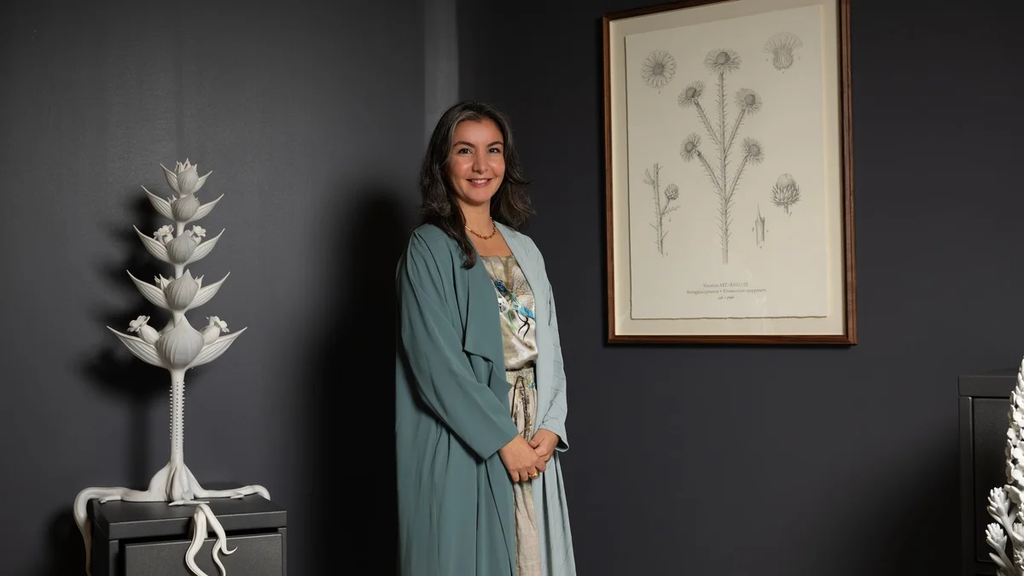
AlYaqoub won for “Flora Incognita,” an installation of invented hybrid desert plants escaping the colonial-era archives that named them. The prize comes with a $100,000 grant, and the work will join the permanent collection of the King Abdulaziz Center for World Culture (Ithra) in Dhahran.
“It was very emotional, to be honest,” she says. “(The nominees) all have very different practices, so you couldn’t guess who was going to win.”
What moved her most was hearing the jury explain why the work had resonated with them. “I’ve always been independent,” she says. “I sell my own work, and I create my own practice on my own. After a while, you’re like, ‘Am I even going in the right direction?’ (But this shows that) people actually do care about what I care about, and there’s something meaningful in what I’m doing.”
She plans to put the money into a new research-based project and a solo exhibition, and to give part of the prize to charity.
The acquisition of “Flora Incognita” by Ithra means a lot, she says, “because it has a longevity now. It shows that I’m part of a trajectory and a conversation that’s happening in the region.”
“Flora Incognita” was born out of a longstanding frustration. AlYaqoub came across “The Wild Flowers of Kuwait and Bahrain” by British botanist and author Violet Dickson, which presents a purple, lavender-like flower as a new discovery. Known in Arabic as Al-Khuzama, the plant had been used by locals for centuries before it was given its Latin name — Horwoodia dicksoniae, after Dickson.
“It’s this external gaze looking on the desert flower as something that wasn’t there until they arrived,” she says. “This Latinized name becomes the official botanical name for this indigenous plant, and that’s where I draw a line. It’s a case study for everything that we’ve lost in the process of colonization — and also independence from it.”
The installation takes the form of a herbarium.
Its plants — 3D-printed sculptures and graphite botanical drawings — are invented hybrids of two existing species.
“They’re from my imagination. They’re not real,” AlYaqoub says, explaining that she chose invented species to turn the idea of the “alien” back on the classifiers.
“It’s so easy to just reclassify something without really understanding its origins or the people that are familiar with it,” she says. “The colloquial becomes insignificant, and the Western idea of what this flower is becomes more significant. So these plants are alien creatures that defy that classification. It’s like, ‘Well, if you see me as an alien, then here I am.’”
One hybrid pairs a parasitic plant with one capable of cell regeneration. “One is invasive and one is placid. What would happen if they were married, and what would it look like?” she says.
The hybrids are left unnamed. “It’s open to interpretation as to who gets to name them now.”
The drawings, she says, also question who gets to produce scientific knowledge. “Anyone can come and decide what the inside of a seed looks like, and it feels like scientific truth. So I’m challenging that by saying: ‘If I can do these botanical drawings, then anyone can.’”
The plants sit in raw steel cabinets that AlYaqoub fabricated from scratch to resemble a Victorian archive. The idea came from a visit to the Royal Botanic Gardens, Kew, in London, where pressed specimens are stored in coded drawers.
“I just felt so sorry for these plants squished in there, in their little sheets,” she says. “It felt more like a prison than an archive.” In the installation, some of the plants escape. “They break free from the drawers, they leave the page, and they rebel against the classification system that they’ve been imprisoned in.”
Research drives all of AlYaqoub’s work, which looks at how states, institutions and scientific disciplines build and sustain authority over territory, history and identity.
“I’m always curious about whose story I’m reading, and how much it is really rooted in truth,” she says. Views from above, including maps and satellite imagery, are a recurring theme. “Who’s looking, and how are they looking?”
She often buys material from antique dealers she has befriended on Instagram, such as a “Free Kuwait” lighter that she calls “so significant in terms of its symbology.” She writes an essay on what she has found, then cuts it to 500 words and then to 150, which becomes her artist statement. She then works in threes: text, object and image.
Saudi Arabia has become central to her career (she describes Saudi audiences as “very eager to learn”), with commissions at Desert X AlUla and in Diriyah before Ithra.
“Once I had my foot in Saudi Arabia, everything just kept rolling,” she says. “When I investigate the landscapes in Saudi, they’re not very far from the landscapes of Kuwait. It just feels like a continuation of the land that’s been separated due to nation-building.”
She is now considering extending “Flora Incognita” into a local, colloquial encyclopedia of plant names and has begun meeting botanists and farm owners. She is also researching the Dilmun civilization that once extended into present-day Kuwait. Next, she says, she would like to exhibit at home in Kuwait.
Gaining recognition regionally first matters to her. “I don’t want to be talking about our landscapes and our places and our histories to ‘them,’ in exile, away from ‘us,’” she says. “I want to talk to us, and then they can hear what we have to say about it.”
While ancient Egypt dominated the northern Nile Valley, a powerful kingdom emerged farther south in what is now Sudan. Known as Kush, it eventually extended its influence into Egypt, ruling the country during the eighth century BC. Yet despite its political and cultural importance, Kush has received far less archaeological attention than Egypt, and its achievements have often been portrayed as imitations of Egyptian civilisation.
Now, archaeologists have uncovered an ancient workshop producing faience, a brightly coloured glazed material, within a major temple complex in the ancient Nubian capital of Napata. The discovery provides new evidence of how Kushite rulers used specialised craft production to reinforce royal authority and control the manufacture of valuable goods.
In a study published in the journal Antiquity, researchers from Durham University in the UK and New York University in the US report that the Temple of Sanam, built by Kushite king Taharqo in the seventh century BC, was not simply a place of worship. It also served as a production centre for objects associated with royal power and funerary traditions.
“Recent scholarship has increasingly challenged older views that portrayed Kush simply as a copy of Egypt, but important questions remain about how the Kushite state controlled resources, labour, production and the distribution of prestige goods,” said Rennan Lemos, an archaeologist at Durham University and the study’s lead author.
A workshop inside a royal temple
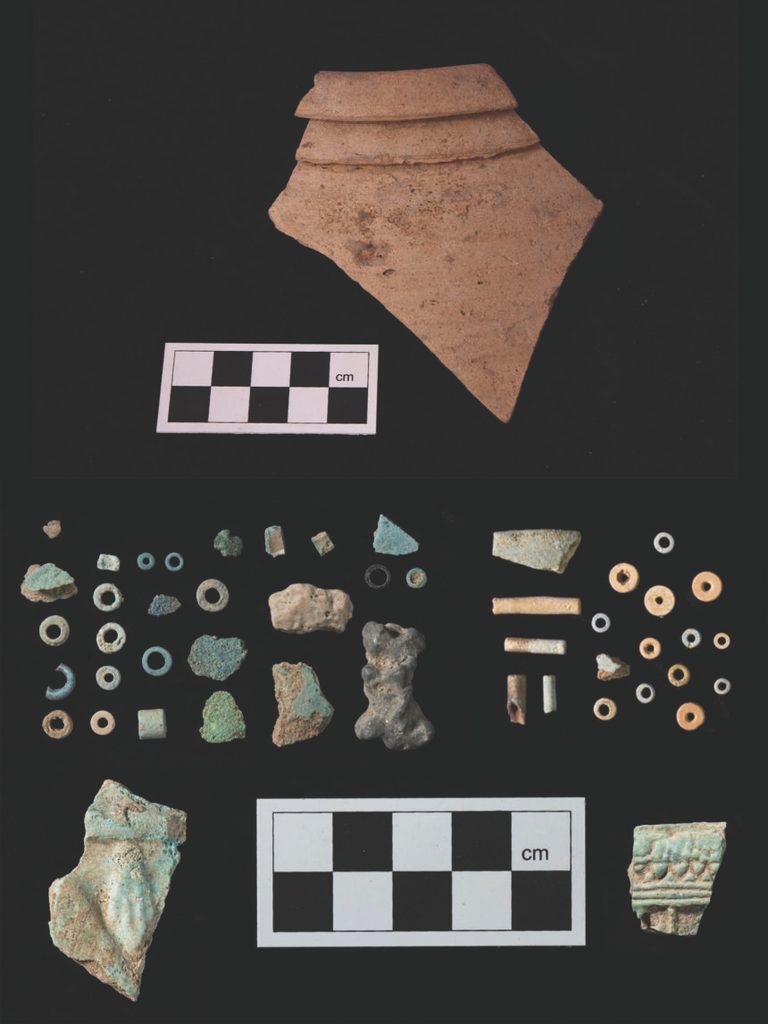
During excavations at the Sanam temple complex, the research team, working with Kathryn Howley of New York University, discovered the remains of a workshop specialising in faience production, alongside hundreds of faience beads and a small funerary figurine known as a shabti.
Shabtis were commonly placed in tombs in ancient Egypt and Nubia. According to funerary beliefs, these small figures could perform work on behalf of the deceased in the afterlife.
Faience was also widely used to make jewellery, amulets and decorative objects because of its bright colours and glossy surface, typically in shades of blue, green and white.
The material was produced by mixing silica-rich ingredients with other substances and heating the mixture until a glassy layer formed on its surface. In ancient Egypt, faience was associated with brilliance and brightness, reflecting both its appearance and its value.
But what particularly interested the researchers was not simply the presence of these objects. It was the location of the workshop itself.
Producing faience involved heating materials in a process that generated smoke and unpleasant fumes. In ancient Egypt, workshops carrying out this activity were generally located on the edges of settlements, away from important central areas.
At Sanam, however, production took place within a major religious complex, suggesting that the manufacture of valuable objects was closely connected to the institutions supporting royal authority.
“This evidence demonstrates that Sanam Temple was not simply a religious monument but also a centre of state-controlled production,” Lemos said.
“The workshop produced faience objects associated with royal power, including shabtis destined for the royal cemetery at Nuri.”
Nuri was one of the most important royal burial sites in the Kushite kingdom, containing the tombs of several rulers, including Taharqo, who ruled Egypt and Nubia during the Twenty-fifth Dynasty.
The discovery therefore offers an unusual glimpse into the economic activities taking place within a royal religious institution and the role of specialised craftspeople in supporting the Kushite state.
Nubian innovation rather than Egyptian imitation
The workshop also revealed an important difference between the manufacturing techniques used in ancient Egypt and Kush.
Egyptian craftspeople commonly used limestone as a source of lime in faience production. But the researchers found evidence suggesting that Kushite artisans may have used crushed seashells instead, an adaptation that made sense because limestone is scarce across much of Sudan.
“The workshop reveals Kushite craftspeople adapted Egyptian-inspired technologies to local conditions,” Lemos explained.
“Instead of relying on limestone, which is scarce in much of Sudan, they appear to have used crushed seashells as a source of lime in the faience recipe. This points to technological innovation rather than simple imitation.”
This finding challenges the long-standing tendency to interpret Kushite material culture primarily through its similarities with ancient Egypt.
Although Kushite craftspeople were familiar with Egyptian technologies and artistic traditions, they did not necessarily reproduce them unchanged. Instead, they selected techniques that suited their needs, modified production methods and created objects carrying meanings specific to Kushite society.
The researchers argue that the workshop also offers rare physical evidence of how the Kushite state exercised economic and political control.
By organising the production of prestigious objects within a royal temple, the authorities may have controlled not only the finished goods but also access to raw materials, skilled labour and the specialised knowledge required to manufacture them.
This suggests a possible difference between the economic foundations of royal authority in Egypt and Kush.
In ancient Egypt, political and economic power was strongly associated with control over agricultural land and production. The new findings suggest that Kushite rulers also placed considerable importance on controlling the manufacture and distribution of luxury and ceremonial objects.
However, the discovery provides direct evidence from one royal temple complex rather than a complete picture of the Kushite economy. It does not establish that all craft production across the kingdom was organised in the same way.
For Lemos, the significance of the findings extends beyond the workshop itself. “This highlights the creativity and agency of ancient Nubian societies,” he said.
Rather than simply adopting Egyptian cultural practices, the Kushites adapted foreign technologies to local circumstances, developed their own production methods and created objects with distinct political and social meanings.
The discovery at Sanam adds an important dimension to the history of Kush, showing that temples could function as centres of economic production as well as religious worship. It also reveals how the artisans who made beads, ornaments and funerary figures contributed to the political authority of one of the Nile Valley’s most influential ancient civilisations.
Honors for technology, energy efficiency, recovery of resources
Kingdom lauded for turning research into practical applications
The Saudi Water Authority has won five international awards for projects focused on water technology, energy efficiency and recovering valuable resources from desalination waste.
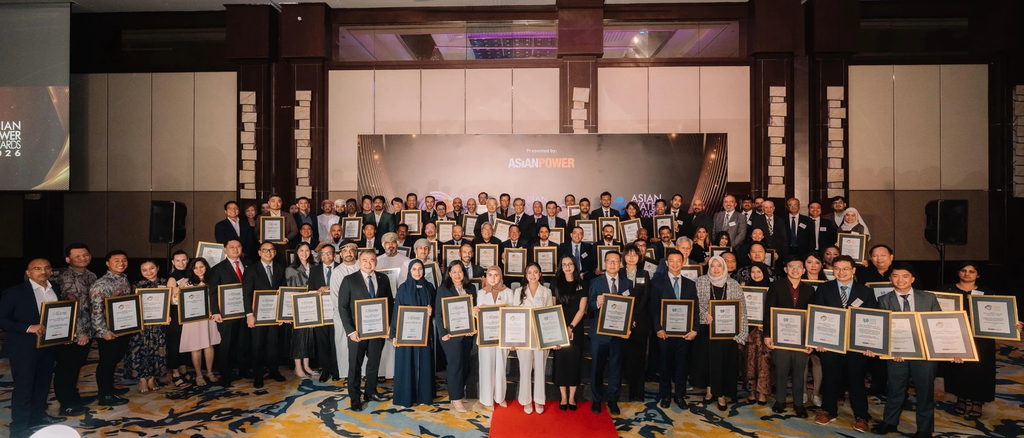
The authority, through its research arm, the Water Technologies Innovation and Advanced Research Institute, or Watira, received the awards at the fourth Asian Water Awards and the 2026 Asian Power Awards in Kuala Lumpur.
Among the recognized projects was a drinking-water enrichment system that uses nanotechnology to extract magnesium from seawater. The project won the Innovation of the Year award and is being deployed on a large scale for the first time globally at the Shuaibah Production System – Phase Four.
The facility has a production capacity of 400,000 cubic meters of water per day and serves more than 1.3 million people, according to the authority.
Another project recognized in the Excellence in Water Technology – Research and Development category produces sodium hypochlorite, used in water disinfection, and high-purity hydrogen from desalination brine within a single system.
The technology reduces energy consumption by 25 percent compared with conventional systems.
The authority also won the Leadership in the Circular Economy award for a pilot project that extracts rubidium chloride from desalination waste using advanced separation and filtration technologies.
The project has a reported recovery rate of 89.02 percent and purity of up to 99.984 percent. Annual production is estimated at 17.95 kg, while its net present value is projected at about $831,000 over 10 years.
The Water Oasis in Rabigh received the Water Innovation Centre of the Year award. Covering more than 33,000 sq. meters, the facility houses over 23 advanced laboratories and large-scale pilot plants used to test technologies and develop their applications. It is listed by the Guinness World Records as the globe’s largest water innovation oasis.
The Waterthon initiative won the Collaborative Water Initiative of the Year award after attracting more than 1,300 participants and generating over 766 ideas. The initiative involved more than 30 mentors, 10 judges and representatives from five universities.
The Saudi Water Innovation Center has helped to establish 43 sector startups and received more than 400 innovation ideas from over 15 countries, the authority said.
It has also launched three specialized incubators in partnership with the National Water Co., the National Center for Water Efficiency and Conservation, and the General Organization for Irrigation.
The awards recognize the authority’s work to turn research into practical applications, improve resource efficiency and develop economically and environmentally sustainable uses for desalination by-products.
source/content: arabnews.com (headline edited)
__________________
The Saudi Water Authority has won 5 international awards for projects focused on water technology, energy efficiency and recovering valuable resources from desalination waste. (Supplied)
The purchase includes the 1,461-room Novotel Thakher Makkah and 14 adjoining development plots.
This deal is facilitated by the recent Law of Real Estate Ownership by Non-Saudis, effective January.
The acquisition supports Saudi Arabia’s goal of hosting 30 million Umrah pilgrims annually by 2030.
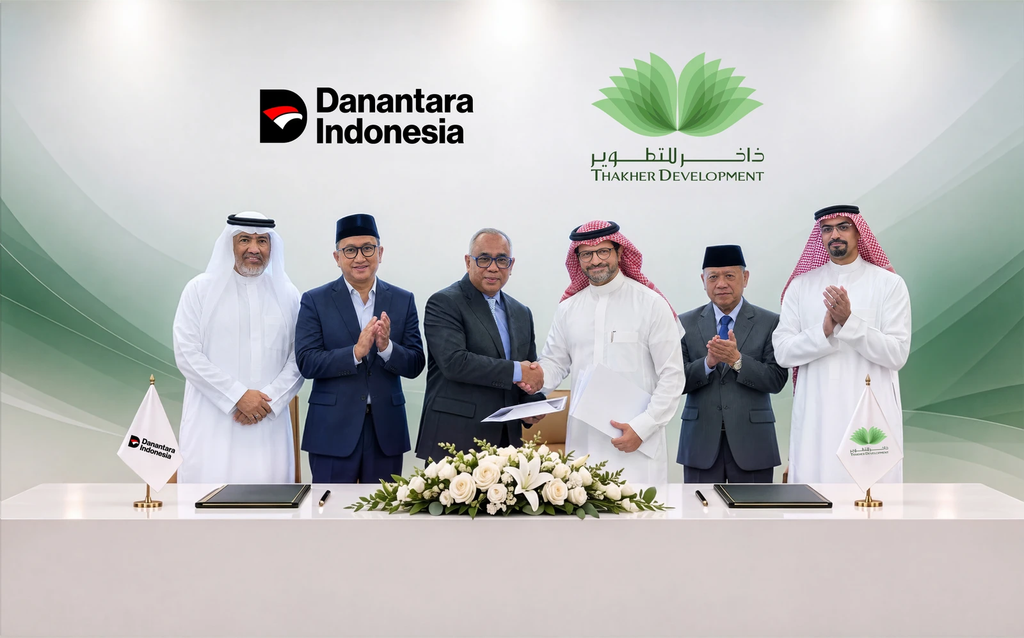
Indonesia has become the first foreign country to own property in Thakher Makkah, after the state’s wealth fund Danantara received ownership certificates for a SR2 billion ($531.4 million) acquisition.
According to a press release, Thakher Development, the master developer of Thakher Makkah, handed over the paperwork, completing the purchase of the 1,461-room Novotel Thakher Makkah and 14 adjoining development plots.
The sale follows the introduction of the Law of Real Estate Ownership by Non-Saudis, which took effect in January, and also supports the Kingdom’s goal of hosting 30 million Umrah pilgrims annually by 2030, up from 8.5 million in 2019.
“This is a historic moment for Thakher Makkah. Welcoming the first foreign state to own property in our destination reflects international confidence in Thakher Makkah,” said Faisal Shaker, CEO of Thakher Development.
“As Thakher Development, we design investment opportunities for partnerships of this scale, and we are proud to have taken this transaction from signature to title in ten months,” he added.
Ending seasonal rentals
For Indonesia, the deal marks a shift from relying on seasonal accommodation to securing dedicated lodging for its pilgrims.
The country has the world’s largest Hajj quota, with 203,320 regular places in 2026, while about 1.5 million Indonesians perform Umrah each year. The hotel will accommodate around 4,400 pilgrims during each Hajj season.
Danantara CEO Rosan Roeslani called the deal “a concrete step in building a long-term hospitality investment platform” in the Kingdom, adding: “More broadly, this marks the beginning of an extended economic partnership between Indonesia and the Kingdom of Saudi Arabia, and we will continue to deepen our bilateral cooperation by exploring opportunities in Madinah and across other sectors that create shared value for both nations.”
Next steps
Accor will keep operating the hotel, which has three 19-storey towers. Danantara plans to develop the 14 plots, totalling 44,088 sq. metres, into hotels with about 6,000 additional rooms and a mall with more than 90 retail outlets, an investment of more than SR2 billion.
Thakher Makkah spans 320,000 sq. metres, 1.2 km north of the Grand Mosque.
source/content: arabnews.com (headline edited)
_______________
The purchase of the 1,461-room Novotel Thakher Makkah and 14 adjoining development plots has been completed. (Supplied)
Yousra to Receive Lifetime Achievement Award at Bahrain Film Festival.
Egyptian actress Yousra will receive the Lifetime Achievement Award in Arab cinema at the sixth Bahrain Film Festival, taking place from November 5th to 10th, 2026. The festival is organised by the Bahrain Cinema Club.
The award recognises Yousra’s decades-long career and contribution to Egyptian and Arab cinema, spanning a wide range of roles and films that have addressed social and human themes. Her work has reached several generations of audiences and filmmakers across the region.
The festival will also honour Syrian actor Ghassan Massoud with an award for outstanding Arab contribution to world cinema. Bahraini filmmaker and cultural figure Nader Al Musqati will receive an award recognising his role in advancing cinema culture in Bahrain, including his involvement in founding the Bahrain Cinema Club in 1980.
Authorities say the project could help preserve national memory and support efforts to establish France’s responsibility for colonial-era environmental damage.
Algeria has launched a preliminary national digital map to document sites damaged by French forces during the country’s colonisation, in a move officials say is intended to preserve national memory and help establish international responsibility.
The platform was unveiled on 7 July during the first session of the Joint Ministerial Committee on Environmental Memory, under the supervision of Algeria’s Ministry of Environment, coinciding with the 64th anniversary of independence from France, which colonised Algeria from 1830 to 1847.
The map is expected to catalogue sites bombed with napalm, areas exposed to banned toxic gases, and places affected by nuclear radiation, drawing on scientific studies and historical testimony.
Environment Minister Kawther Krikou said the platform would be updated gradually as field studies and investigations identify new sites.
Mohamed Lahcen Zeghidi, coordinator of the Algerian Committee for History and Memory, said the project was an important step in documenting the environmental legacy of colonial crimes and their impact on human and animal health, vegetation and ecosystems across Algeria.
Hussein Abdel Sattar, director of the National Centre for Studies and Research on Popular Resistance, said re-examining colonial crimes that affected ecosystems was necessary to understand the scale and duration of the damage and to build a scientific approach that links memory, environmental protection and environmental justice.
He cited nuclear explosions, chemical weapons, napalm attacks, mine-laying and resource extraction as among the crimes and practices under review.
Why it matters
France’s colonial rule in Algeria left environmental damage that Algerian officials now describe as environmental crimes, including scorched-earth tactics and contamination linked to military activity.
The most significant case is France’s nuclear testing in the Algerian Sahara — the health and environmental effects of which remain a live issue in Algeria’s memory and reparations campaign.
International humanitarian law protects the environment during armed conflict, while the Rome Statute prohibits attacks carried out with knowledge that they will cause widespread, long-term and severe environmental damage, though that standard is difficult to meet and rarely applied.
However, legal experts note that the chronology is crucial — many of the worst abuses predate modern treaty rules and the International Criminal Court, making war-crimes language more useful as a moral and analytical framing than as a straightforward basis for prosecution.
source/content: newarab.com (headline edited)
_____________
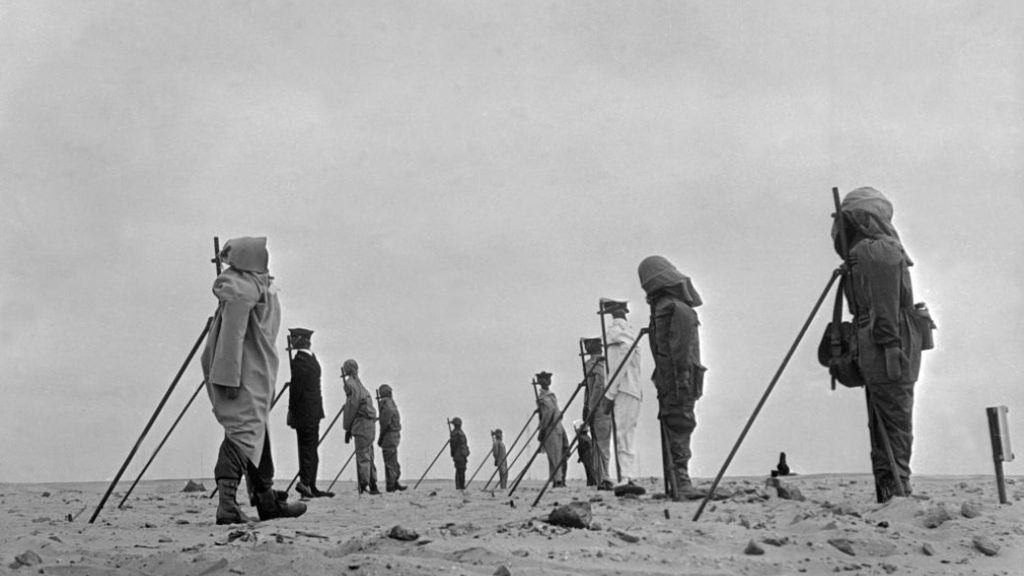
A group of dummies set up on the French nuclear weapons testing range near Reggane, Algeria, before France’ss third atomic bomb test, 27th December 1960 [GETTY]
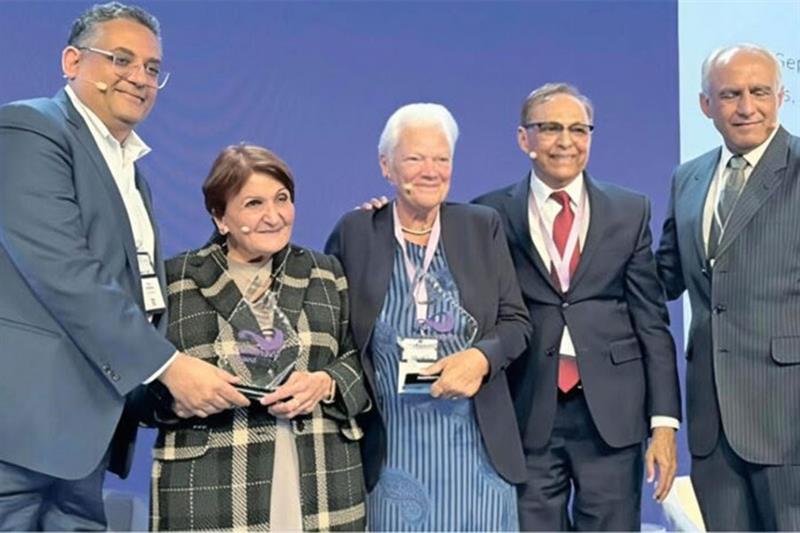
Egyptian paediatric haematologist Amal El-Beshlawy has won an international lifetime achievement award for her nearly 27 years of work in diagnosing and treating Gaucher disease.
El-Beshlawy, a professor of paediatric haematology at Cairo University’s Faculty of Medicine and Qasr Al-Ainy hospitals, received the award at an international rare diseases conference held recently in Paris. It recognizes her clinical research, medical leadership, and efforts to improve care for children living with the rare inherited condition.
The award, presented by pharmaceutical company Sanofi, recognizes doctors and scientists whose work has significantly advanced the understanding, diagnosis, and clinical management of rare diseases.
El-Beshlawy’s research and clinical leadership have contributed to a better understanding of type 3 Gaucher disease. Her participation in international disease registries and her work on medical care guidelines have also helped improve the management of affected children.
Her work has focused on promoting early diagnosis, improving access to treatment and raising doctors’ awareness of how to recognize and manage the disease. These efforts have helped support more consistent care for patients in Egypt and the wider region.
Cairo University welcomed the award, describing it as recognition of the scientific standing of its researchers and the contribution of Qasr Al-Ainy’s medical professionals to healthcare beyond Egypt.
Hossam Salah, dean of the Faculty of Medicine and chairman of the university hospitals’ board, congratulated El-Beshlawy, saying her achievement reflected the ability of Egyptian medical professionals to compete at leading international scientific and medical forums.
Beyond research and clinical practice, El-Beshlawy has contributed to international collaboration, medical education, and the training of a new generation of specialists in rare diseases.
Gaucher disease is a rare inherited disorder caused by a deficiency of an enzyme needed to break down certain fatty substances inside cells. As these substances accumulate, they can damage organs and other tissues.
The disease can cause enlargement of the liver and spleen, bone pain and other skeletal complications. Symptoms and severity vary depending on the type of disease and the individual patient.
As its symptoms can resemble those of other conditions, recognizing Gaucher disease and establishing an accurate diagnosis are important for ensuring appropriate treatment and ongoing medical monitoring.
The award ceremony also honoured Italian professor Maria Domenica Cappellini for her scientific and research contributions to Gaucher disease, beta thalassaemia, and related haemoglobin disorders.
El-Beshlawy’s achievement highlights the role of Egyptian specialists in advancing care for rare diseases, where sustained clinical expertise, research, and international cooperation can help improve patients’ quality of life.